
Banking
BIN Sponsorship
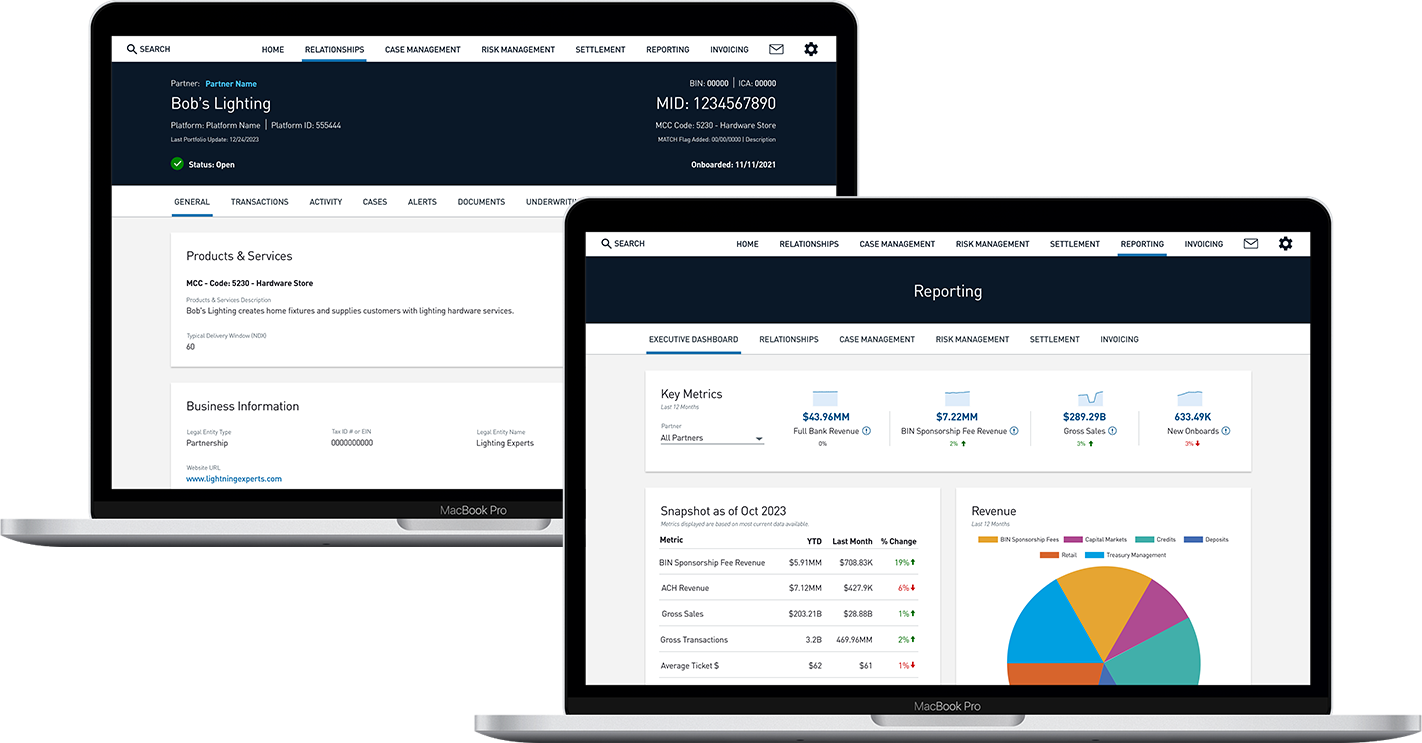
I led the redesign of a top-10 U.S. bank — PNC Bank’s — BIN (bank identification number) sponsorship process, transforming a complex business challenge into a streamlined digital experience. By applying human-centered design, I helped ensure merchant activity aligned with bank policy, card brand standards, and international regulations.
Human-Centered Strategy & Design Leadership
Facilitated discovery workshops to map user roles, evaluate the sponsor bank experience, and uncover pain points in the BIN sponsorship and merchant onboarding process
Led collaborative sessions to co-create and validate process maps and user flows with stakeholders
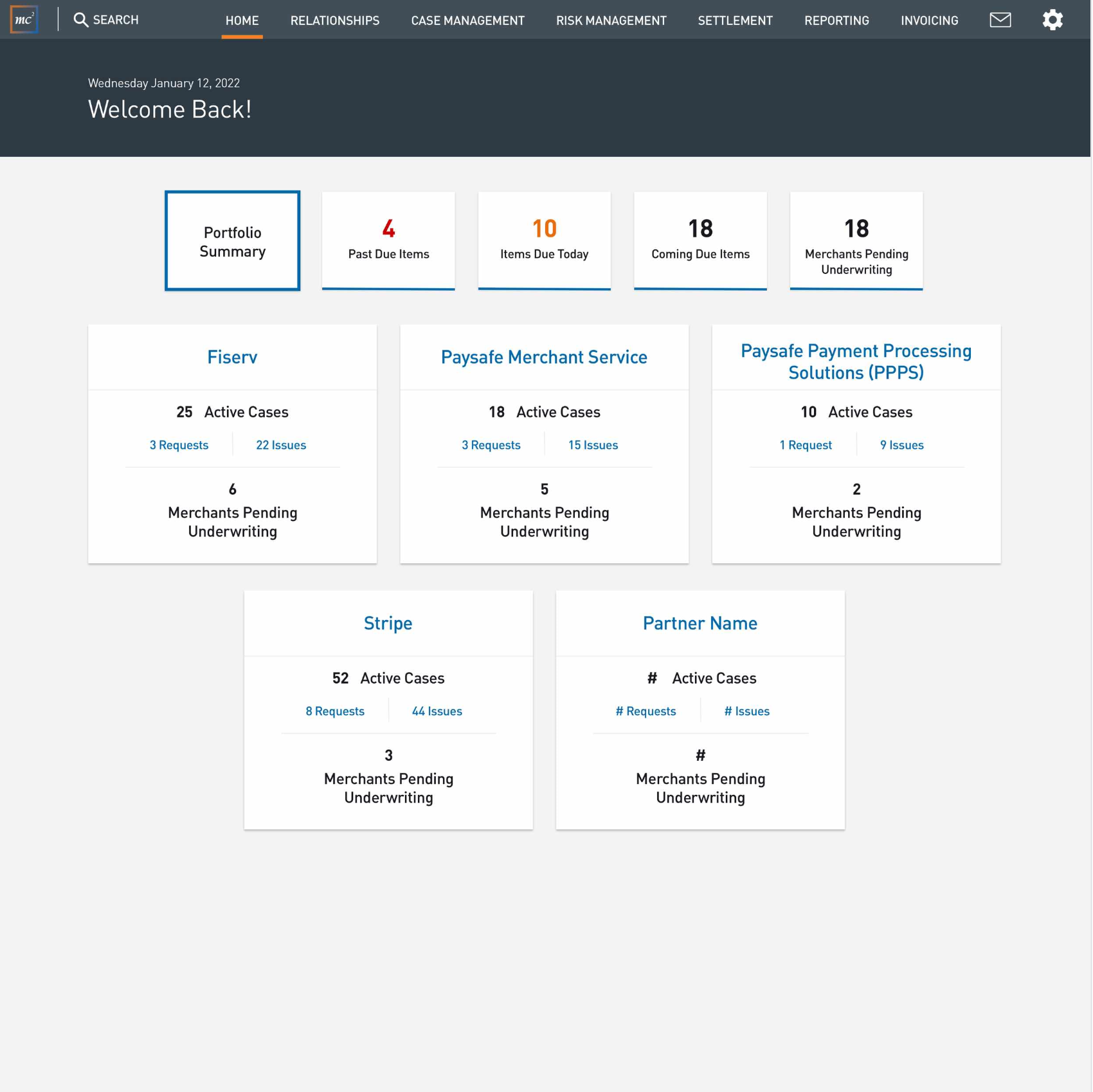
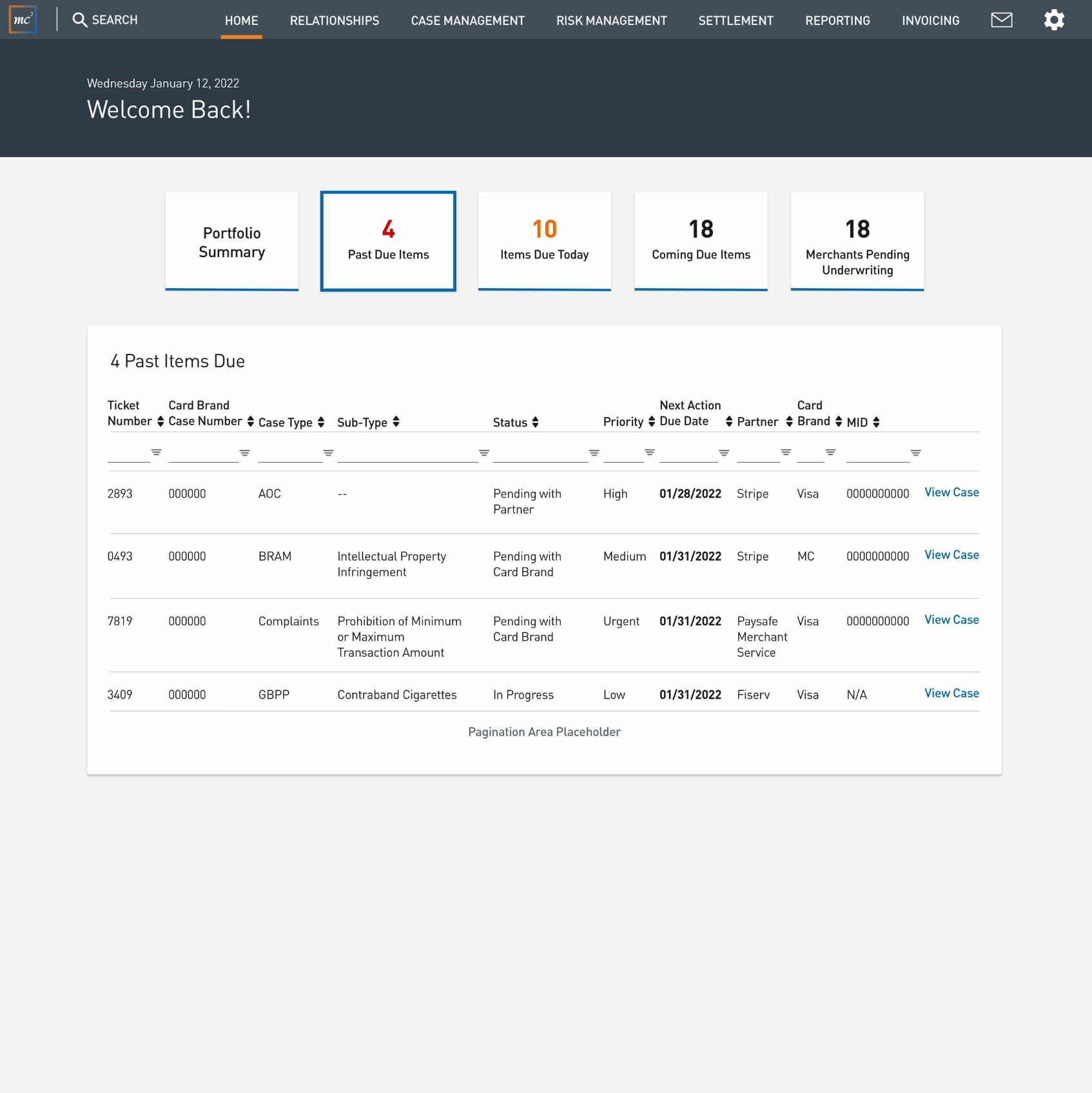
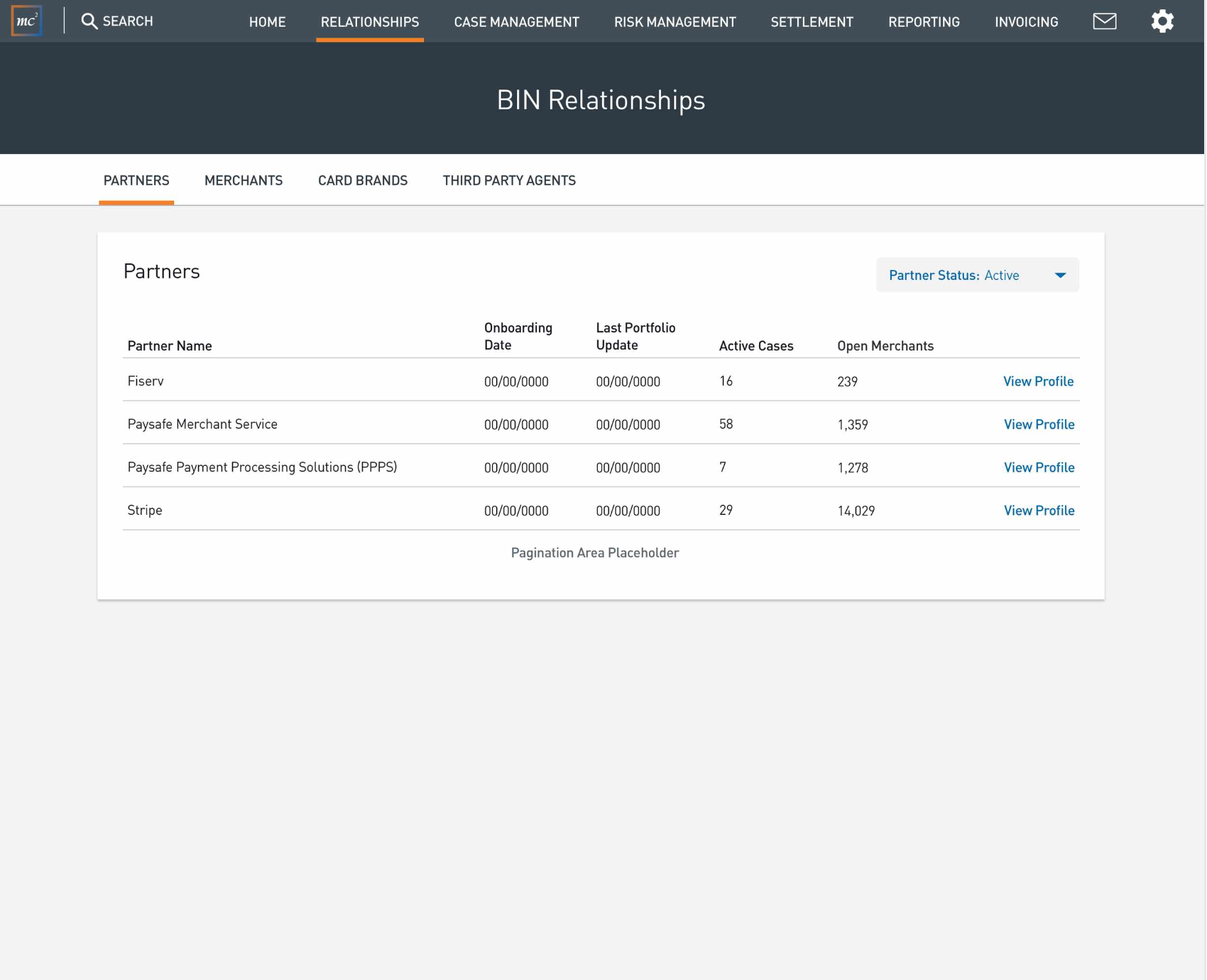
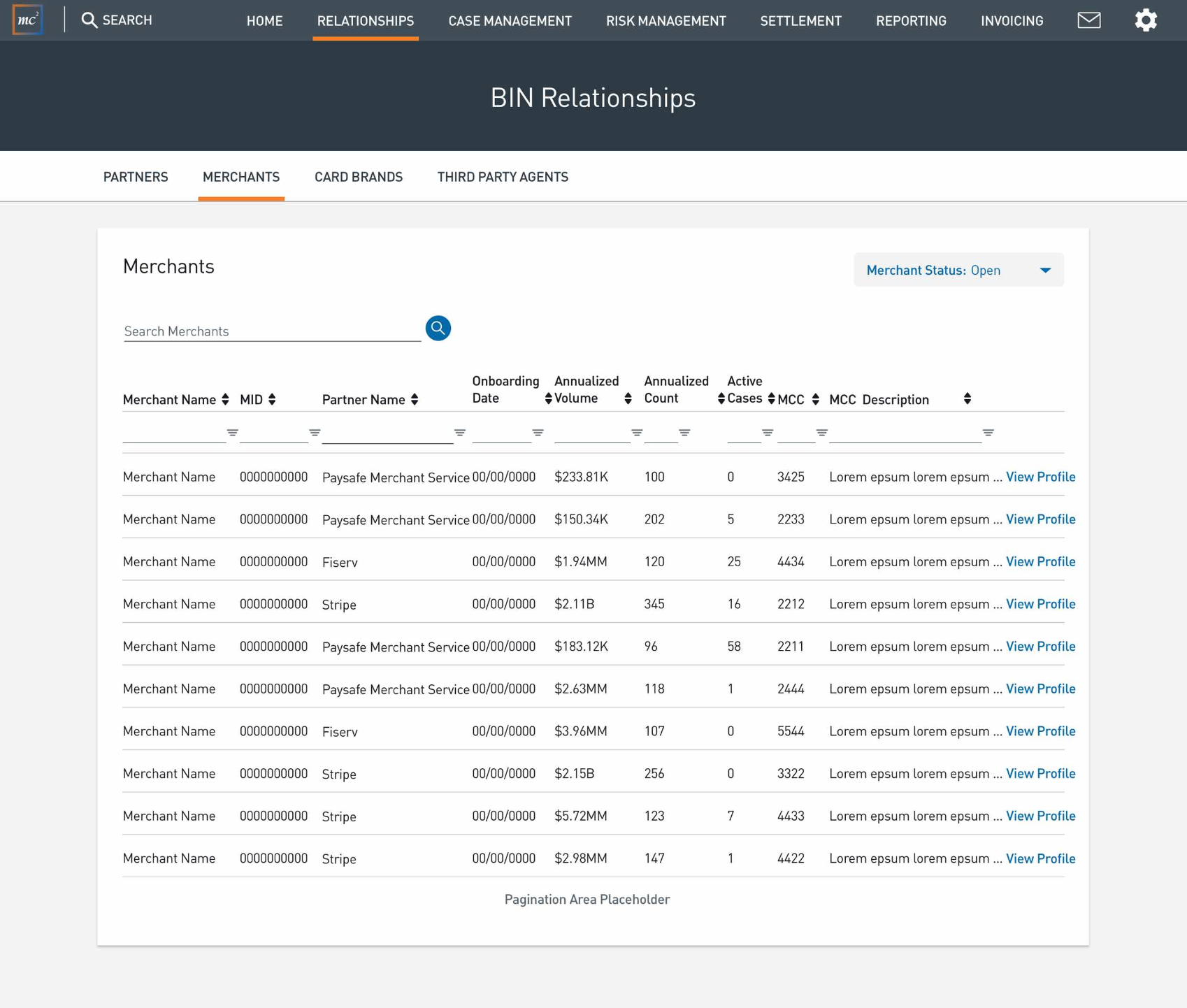
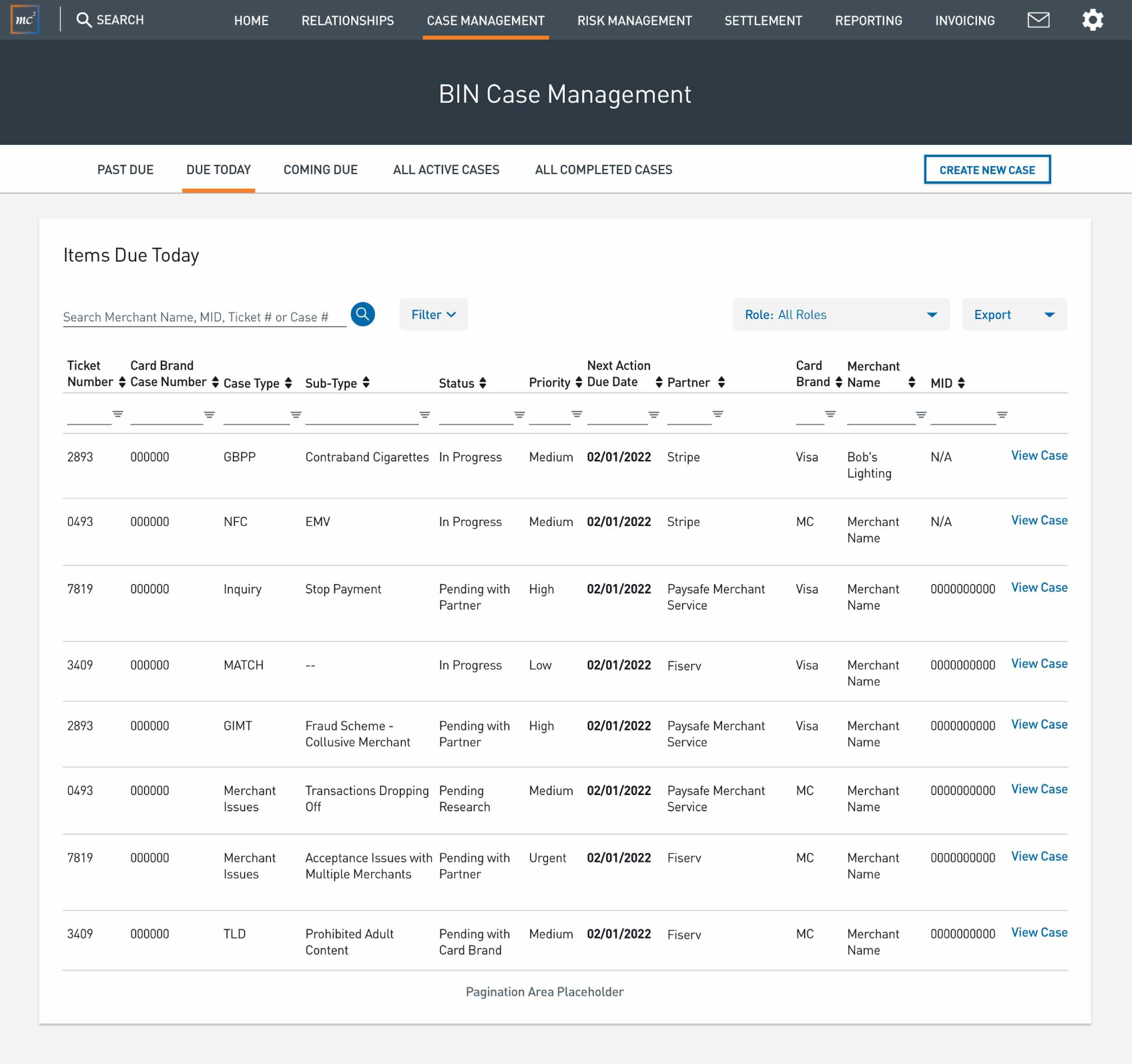
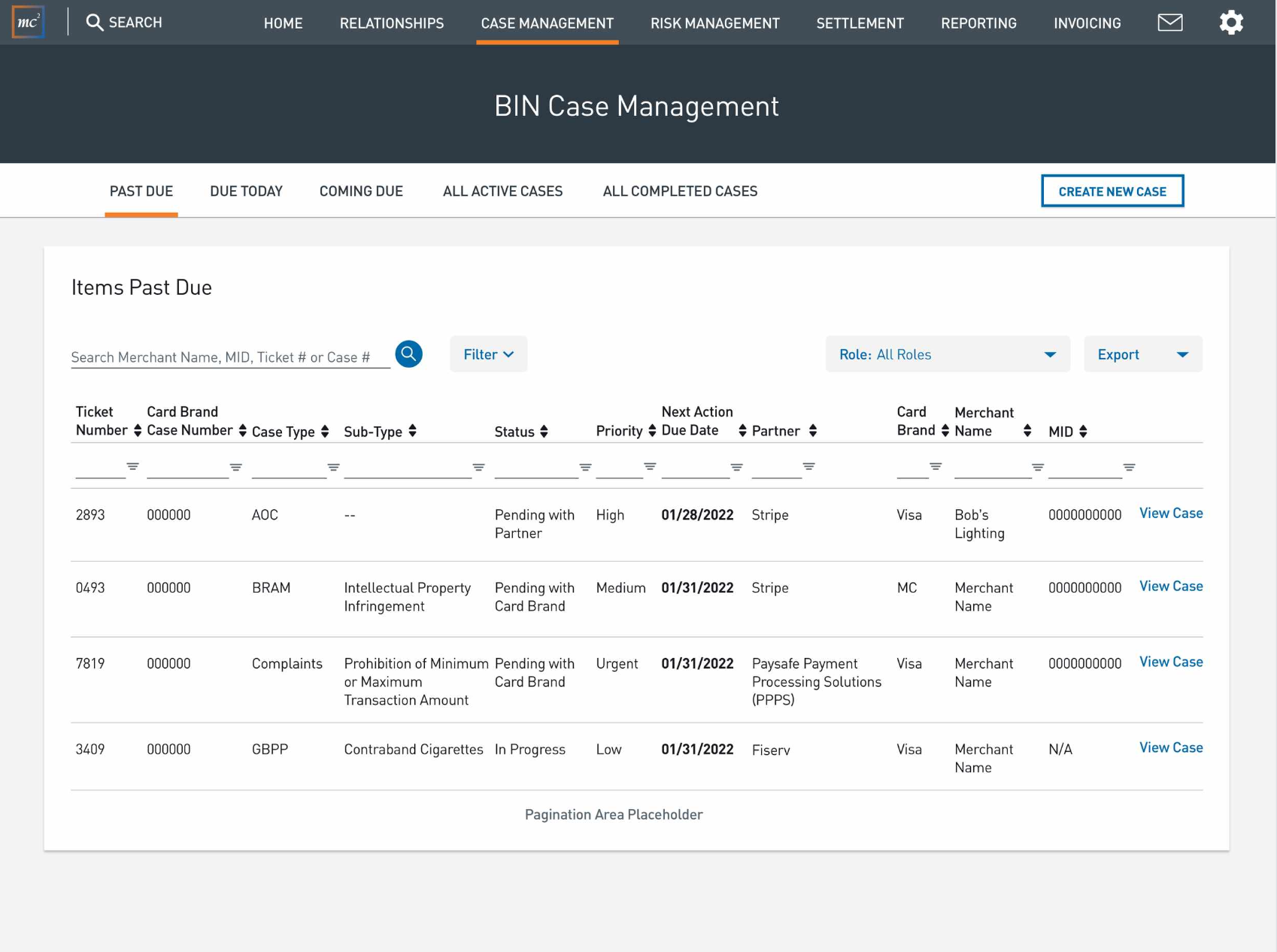
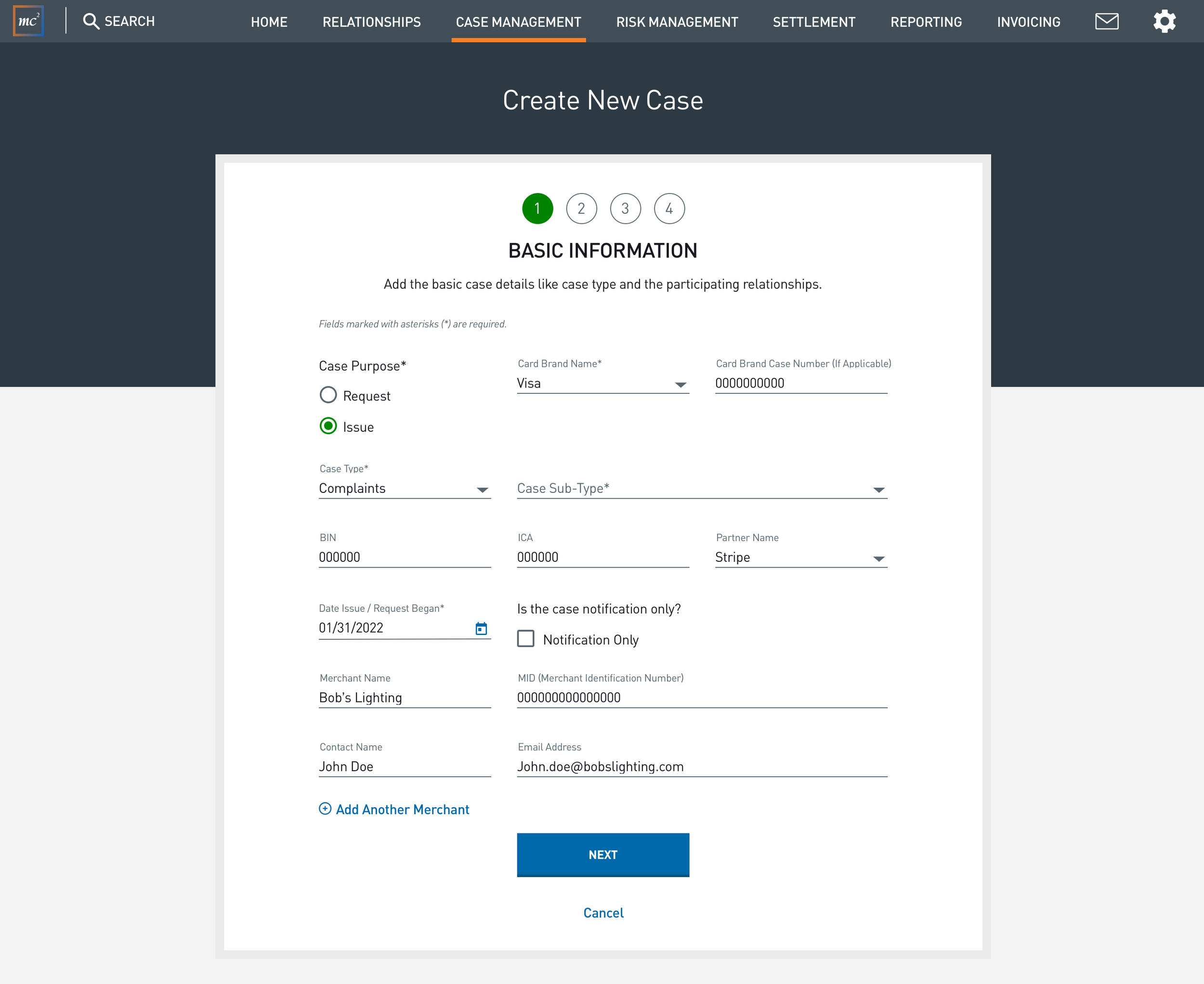
Delivered high-fidelity designs and an interactive prototype for a streamlined case management system
The Challenge
BIN sponsorship is a high-risk process often targeted by fraud and illicit activity. Sponsor banks are accountable for monitoring and mitigating this risk — but one top-10 U.S. bank faced critical gaps due to manual workflows, limited oversight tools, and heavy reliance on third-party information. This lack of visibility made it difficult to detect suspicious behavior and enforce compliance with internal policies and global regulation.
Engagement Scope
A 2-year digital transformation initiative focused on overhauling the BIN sponsorship process — demonstrating the bank’s long-term commitment to regulatory compliance, operational efficiency, and merchant accountability across internal policy, card brand standards, and international law.
Strategic Approach
Collaborated cross-functionally to align on pain points, roles and process gapes using a human-centered lens. Key activities included:
Discovery sessions with stakeholders, end users, and SMEs
Journey mapping and workflow audits to clarify responsibilities and surface inefficiencies
MURAL white boarding to co-create future-state processes and share understanding
Delivered visual artifacts that guided design decisions and development handoff
Design & Prototyping PRocess
Building on discovery insights, I led ideation and design efforts through a collaborative, iterative approach:
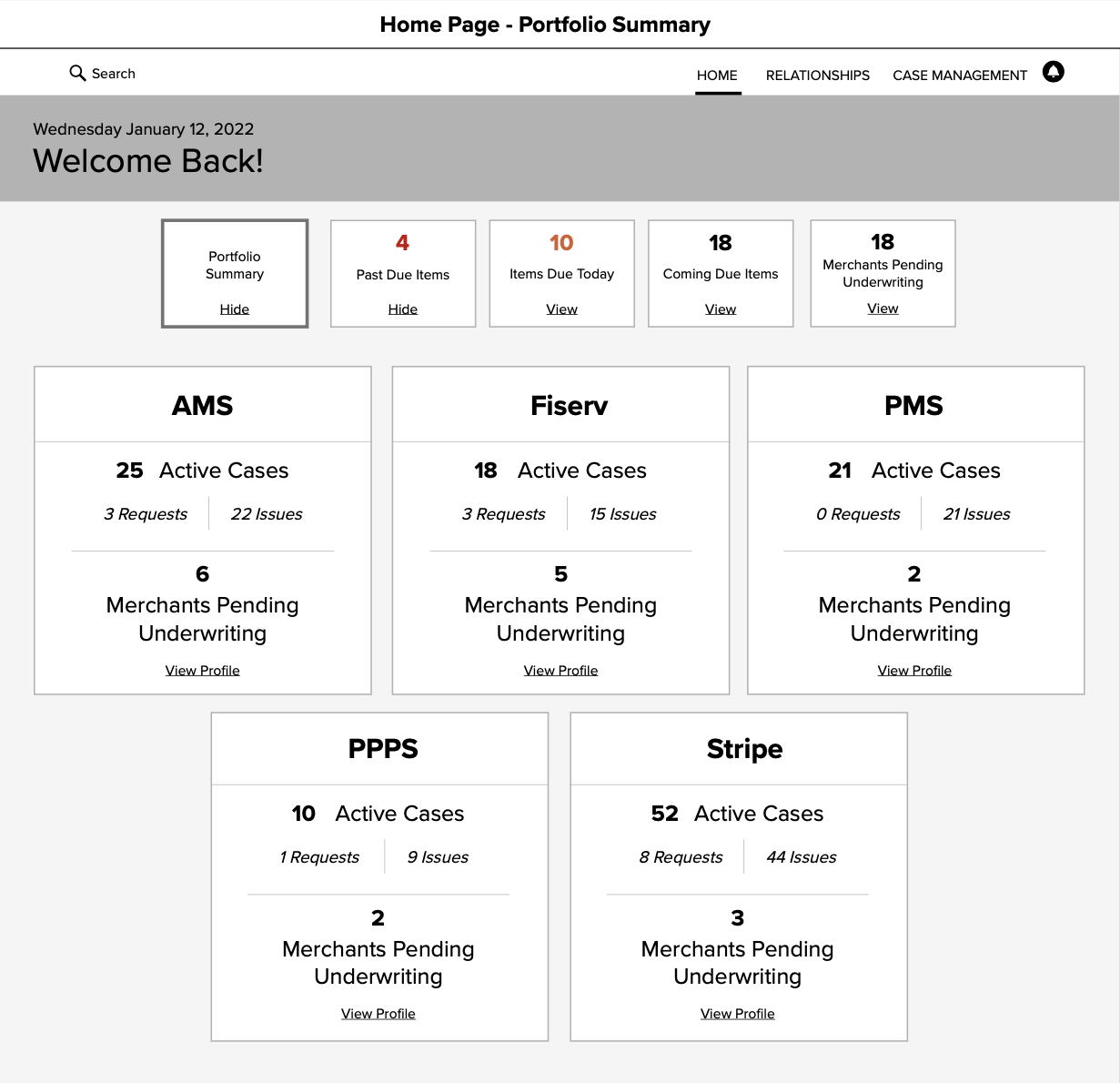
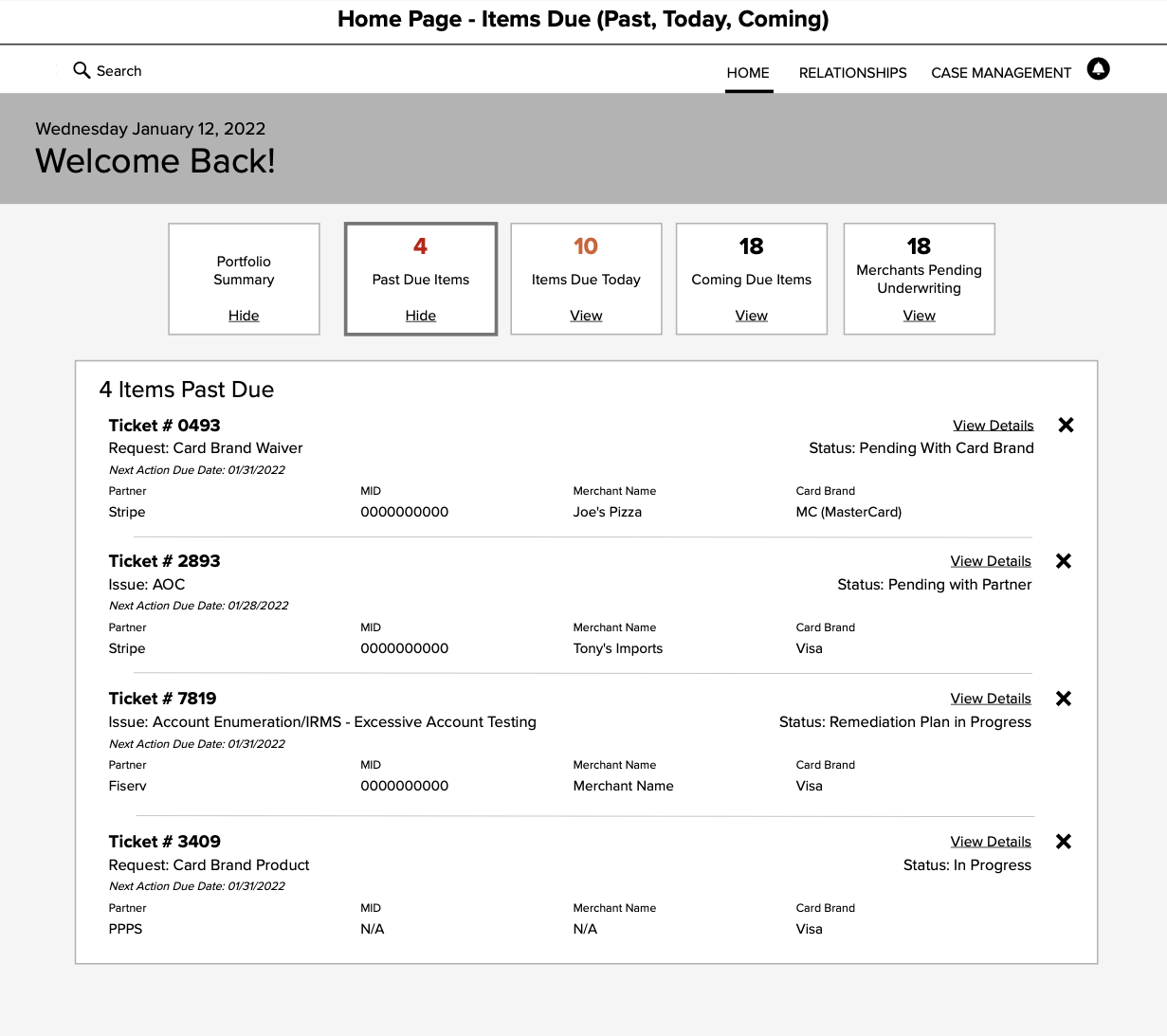
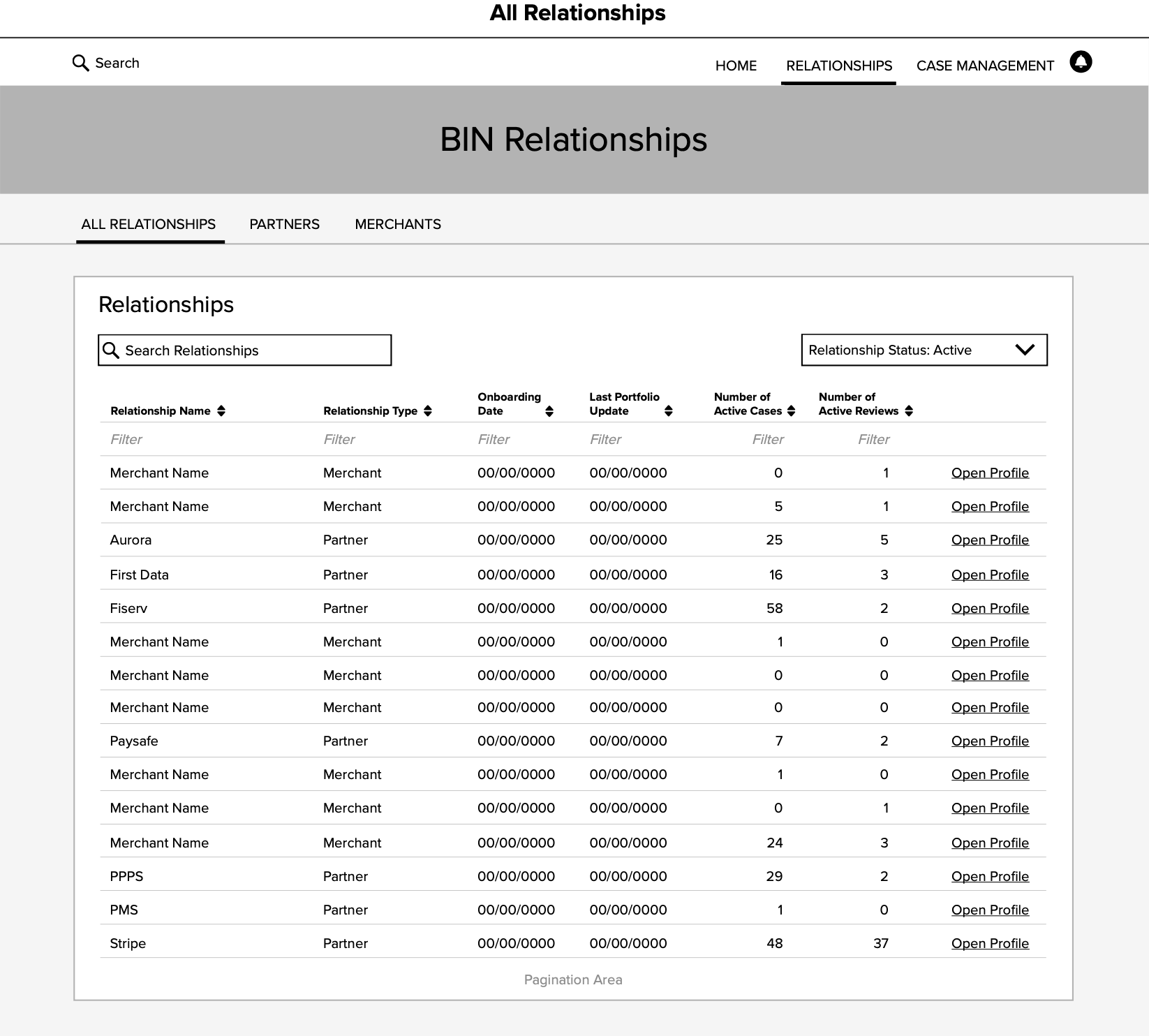
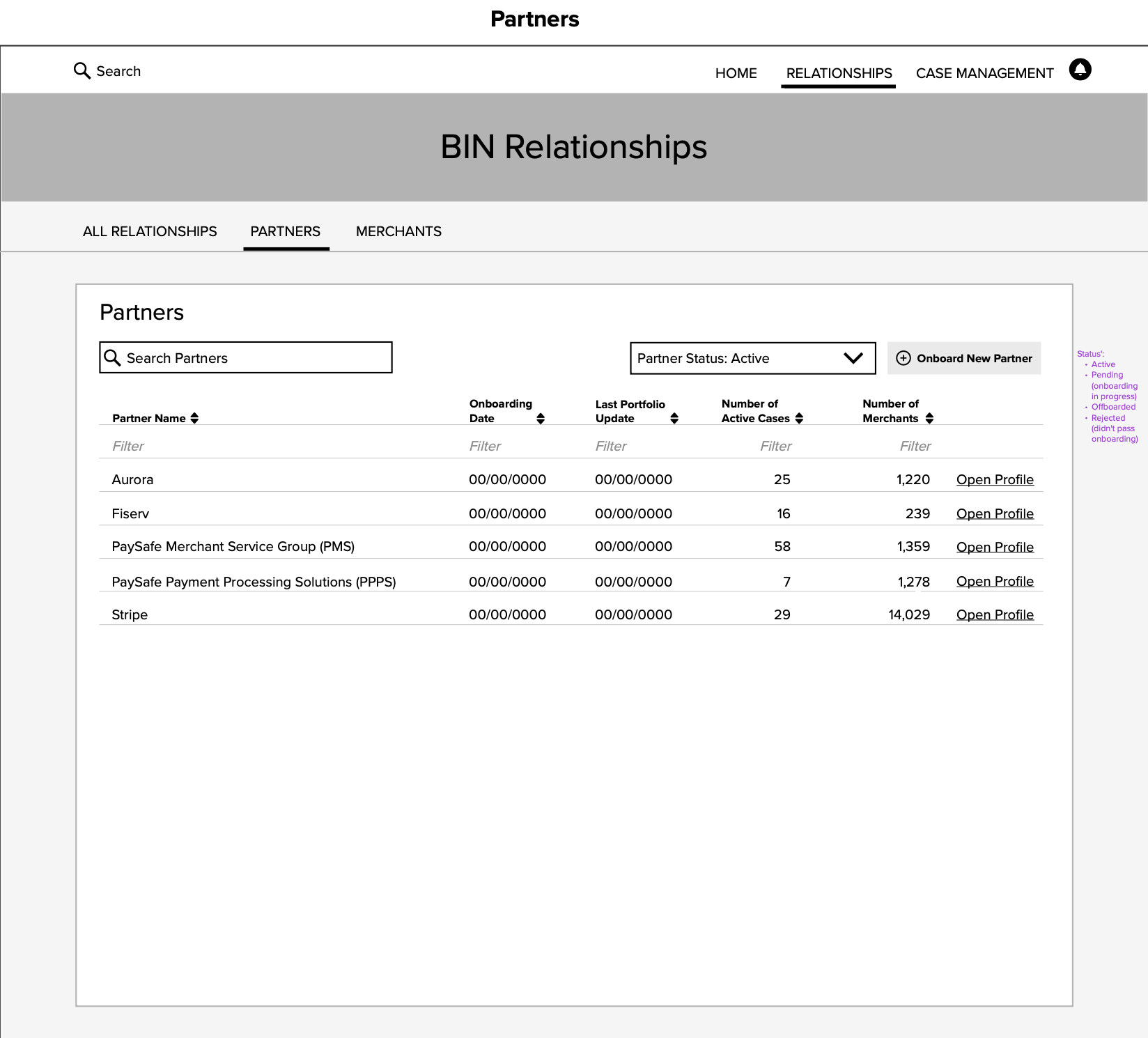
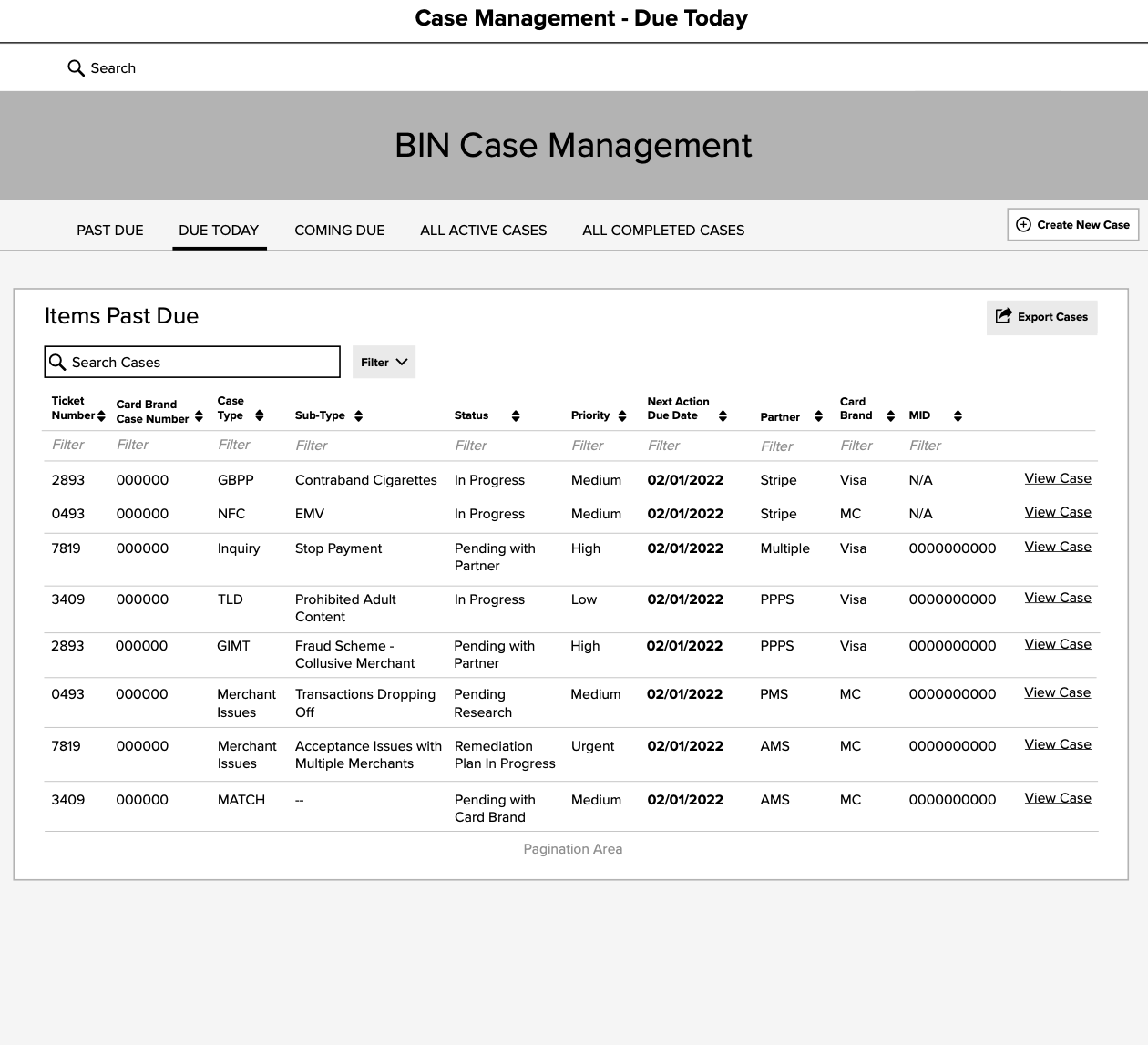
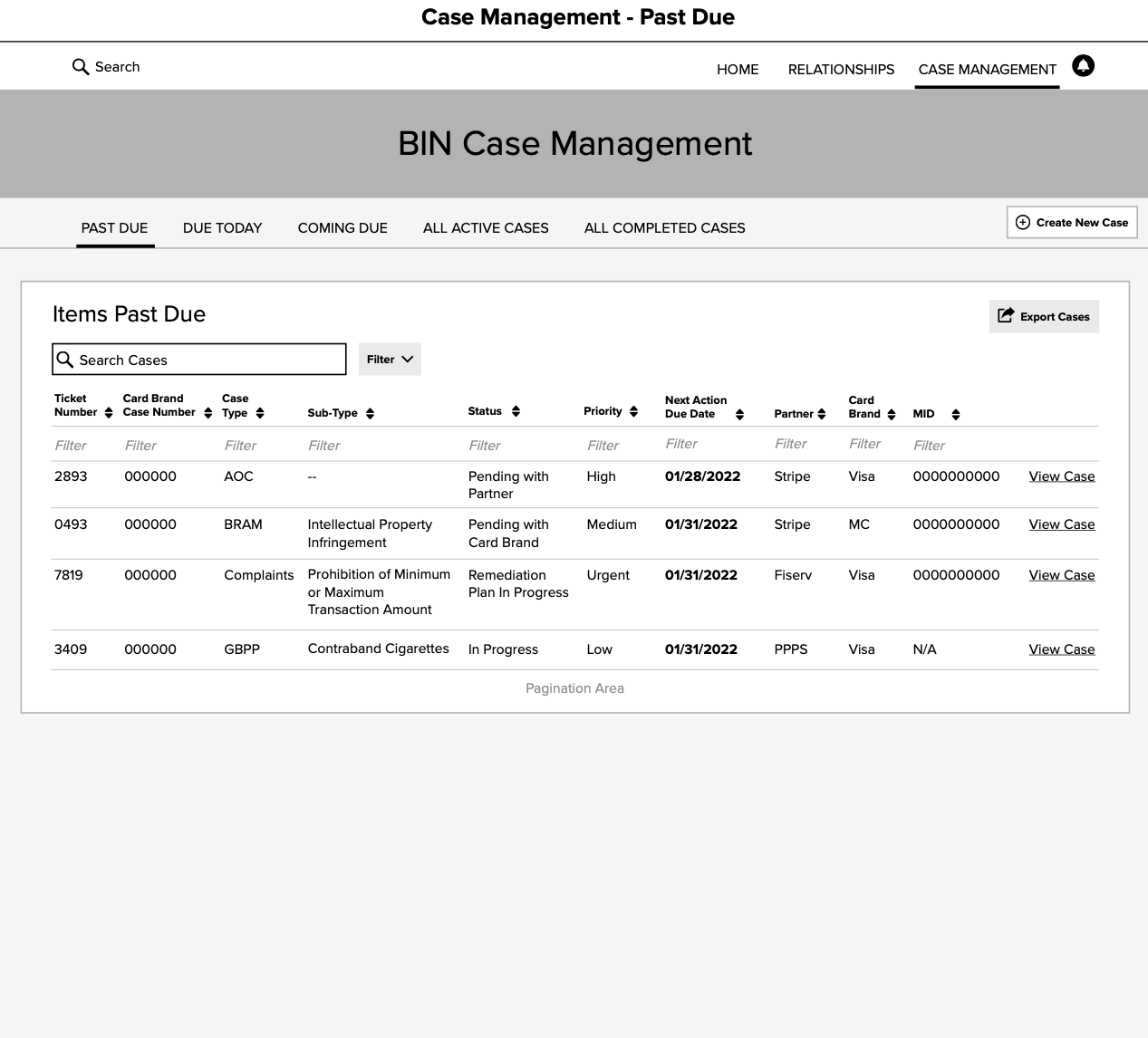
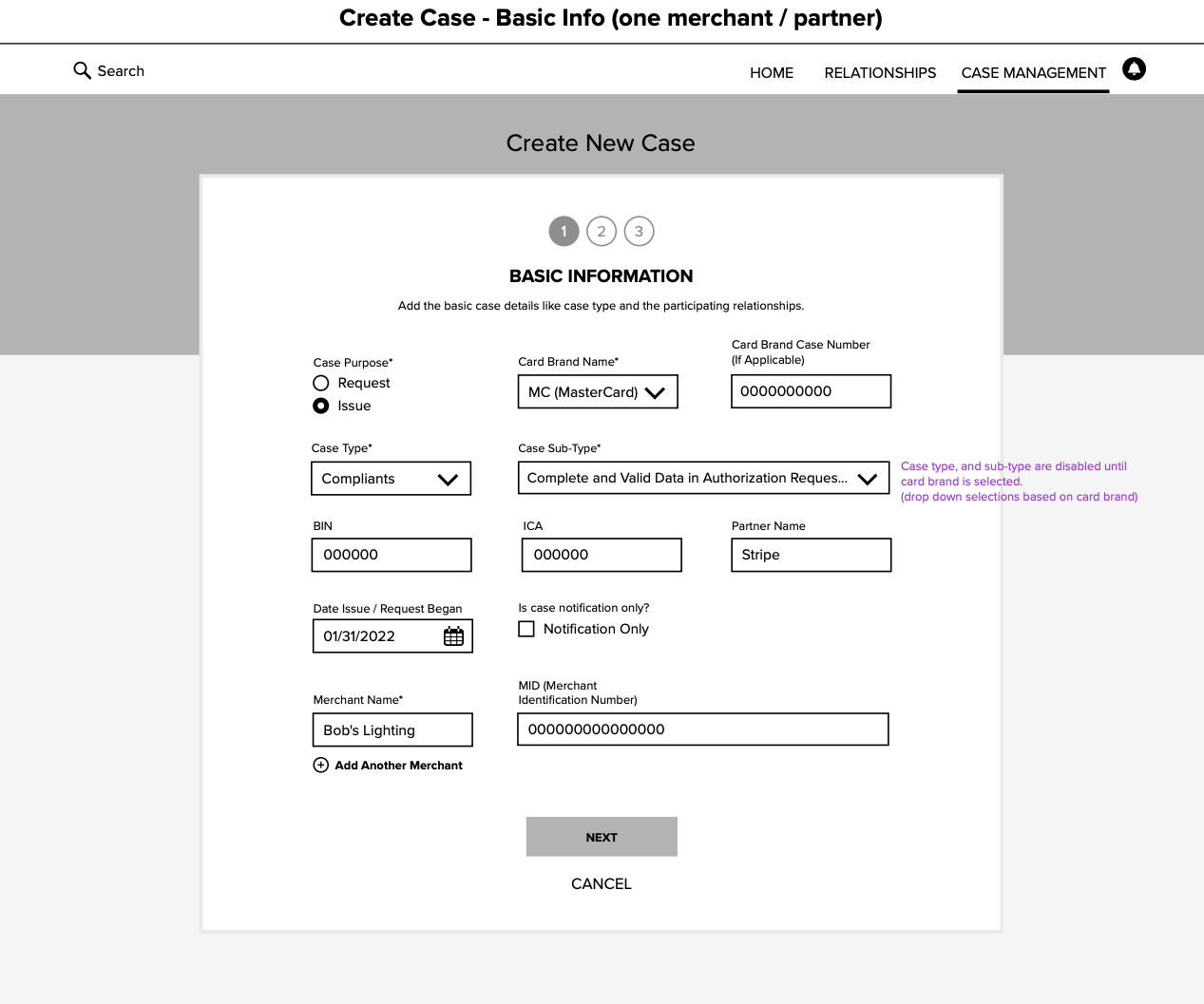
Sketched low-fidelity concepts to explore layout, functionality, and user flows (see examples below)
Refined into high-fidelity designs and an interactive prototype to support development of the initial product: a dynamic case management system with unified partner and merchant profile views
Facilitated co-design workshops to shape short & long-term decision models for automated merchant risk analysis
Aligned designs with compliance needs & operational goals through continuous requirements validations and stakeholder feedback
Developed a holistic experience that reflects card brand expectations & enhances transparency across the sponsorship process
Outcomes
The redesigned BIN sponsorship system modernized the bank’s approach to risk management & compliance — enabling scalable, secure growth across its merchant portfolio.
97% increase in merchant risk reviews
50% growth in fee-based revenue within the first year
$289B in merchant transactions processed In 2023
169% increase in merchant sponsorship
Consolidated 5+ legacy tools into a single integrated platform
Reflections
What Worked Well
Cross-functional collaboration created strong alignment between design, compliance, and business stakeholders
Co-design sessions empowered users to shape the system around real workflows, accelerating adoption
Iterative prototyping allowed for early validation and de-risked development
Future Considerations
Earlier involvement from engineering could further streamline feasibility assessments during iteration
Ongoing user feedback loops post-launch would ensure continuous improvement as business needs evolve
Designing for modular scalability could support additional card brands or risk models with less rework